

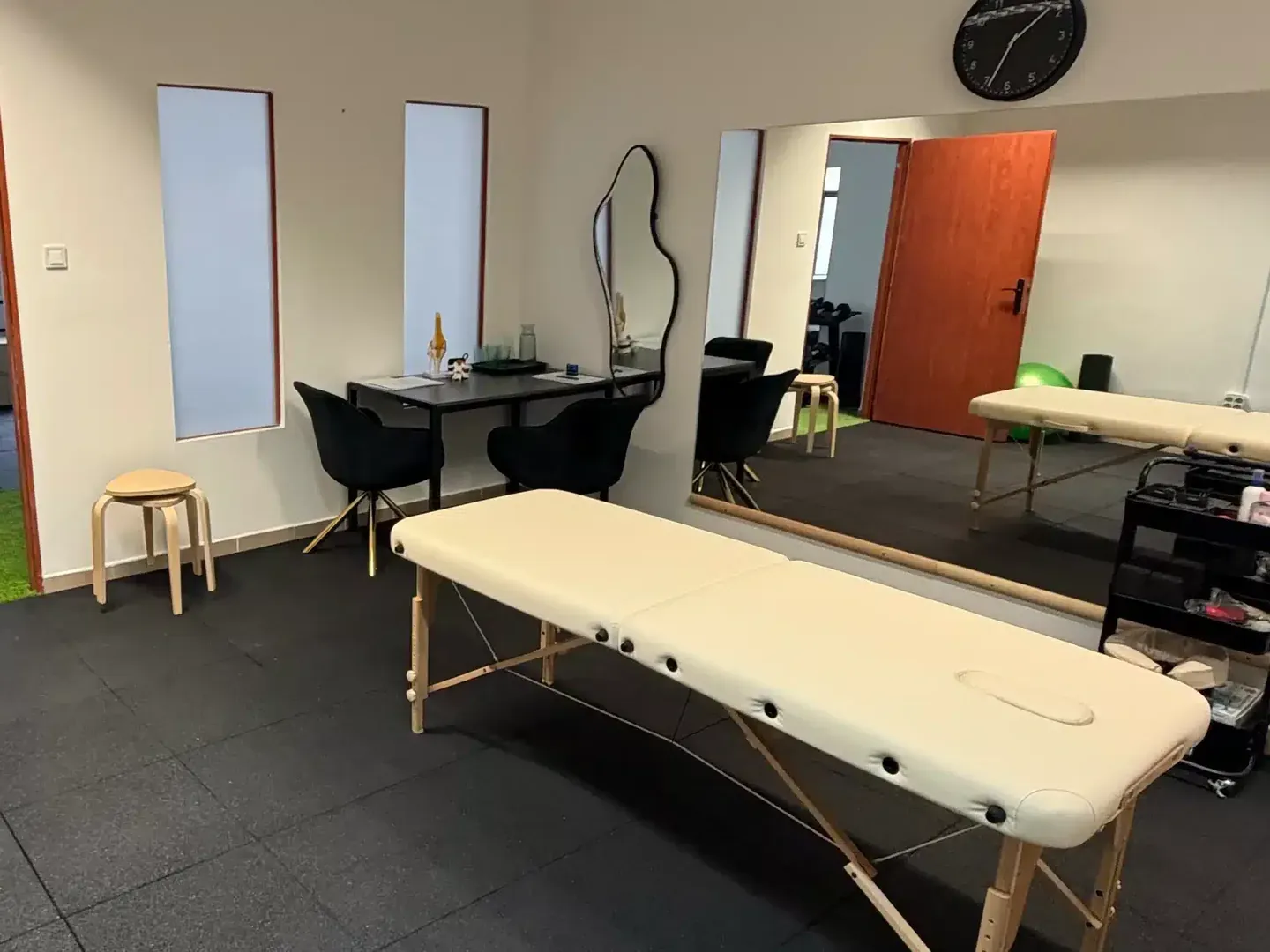
Many people arrive for a first session with no idea what is about to happen. That is understandable: the word physiotherapy brings up hospital corridors, resistance bands and unpleasant memories all at once. Here it starts differently, and it helps to know that in advance.
The first session is mostly conversation and observation
We begin with an assessment. We go through how long the complaint has been there, when it gets worse, when it eases, what kind of work you do, how much you sit, what sport you play, and whether you have had an injury or an operation before. This is not a formality: most musculoskeletal complaints have habits behind them, and habits only become visible if you ask.
Then comes the movement assessment. We look at how you bend, how you squat, which way your neck turns easily and which way it does not, and what your body tolerates under load. That is what shows where the tension builds and where the stability is missing.
What to bring
Comfortable clothes you can move in, indoor shoes and a small towel. If you have previous test results, imaging or a recommendation from a doctor, bring them: not compulsory, but they help us build a more accurate picture. Arrive a few minutes early so the session does not start in a rush.
The first session is not only assessment
Once we have the picture, we start the work. You get a few exercises, we go through them together, and we explain why those particular ones. That last part matters more than it sounds: people who understand what they are doing and why also do it at home.
Homework, because once a week is not enough
The backbone of the process is the exercises you do at home. They are short, a few minutes, and they are deliberately built that way so they actually fit into your day. If they do not fit, say so and we will rework them. A programme you do not do is not a good programme.
How long until there are results
There is no honest general answer to this. Some people improve a great deal within a few sessions; others need a longer, deliberately built process. After the first few sessions the direction is already visible: whether the complaint is changing, and what your body responds to.
When not to start with physiotherapy
Physiotherapy does not replace a medical examination or a diagnosis. If the pain started suddenly, if it radiates into your arm or leg, if it comes with numbness, if you have recently had surgery or treatment after an accident, or if the complaint comes with fever, weakness and weight loss, see a doctor first. During pregnancy, ask for medical advice before starting any exercise programme.
Related service
Physiotherapy
One to one movement therapy for musculoskeletal complaints, posture and recovery after surgery.